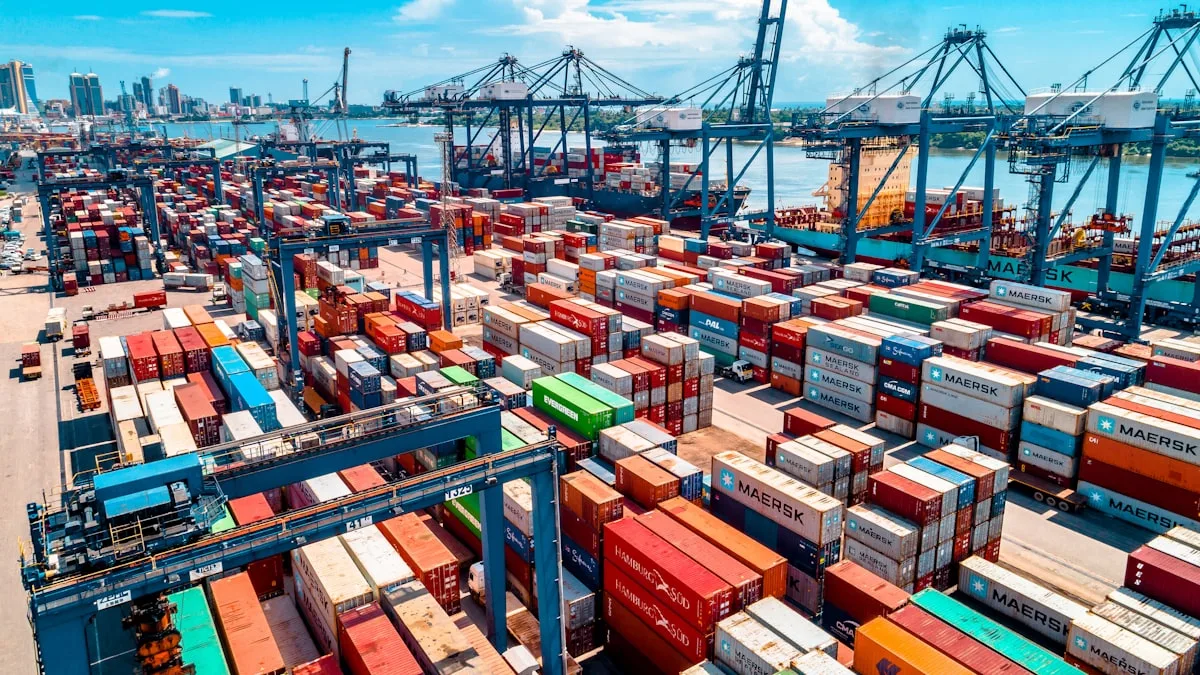
Choosing a frozen-seafood import partner is one of the more consequential procurement decisions a hospitality or food-service business will make. The right partner protects your kitchen from stockouts, keeps food-safety risk low, and lets your team plan menus with confidence. The wrong one introduces inconsistency, hidden costs and reputational risk that surface at the worst possible moments — mid-service, mid-banquet, or mid-audit.
For hotels, restaurants, AVM food courts, catering companies, official institutions and wholesalers, seafood is rarely a casual purchase. Volumes are meaningful, specifications matter, and the product is unforgiving: a break in the cold chain or an inconsistent grade can compromise an entire delivery. That is why serious buyers treat partner selection as a structured evaluation rather than a quick price comparison.
This guide walks through the criteria that genuinely matter when you assess a seafood import and supply partner — from traceability and cold chain to documentation, communication and total value — and ends with a practical checklist you can use in your next sourcing conversation.
Why Partner Selection Matters More Than Price
A single low quotation is easy to find. A supplier that delivers the same species, the same size grade, the same glaze level and the same quality — order after order, month after month — is far harder to find, and far more valuable. The cost of a "cheap" partner rarely stays cheap: rejected deliveries, emergency substitutions, last-minute menu changes and customer complaints all carry a price that never appears on the invoice.
Reliable supply is ultimately about predictability. When your seafood arrives correctly specified, properly frozen and on schedule, your chefs cost dishes accurately, your purchasing team plans ahead, and your service runs smoothly. The best partners reduce the number of decisions you have to make under pressure.
The true cost of a seafood supplier is not the price per kilo — it is the price per kilo plus every problem that price creates downstream.
Quality and Traceability
Quality in frozen seafood is not a single attribute; it is a chain of controlled steps from catch or harvest through to your cold store. When evaluating a partner, look beyond the photograph on a spec sheet and ask how quality is actually maintained.
- Sourcing transparency: Can the partner tell you where a product originates, whether it is wild-caught or aquaculture, and which producers or processing partners are involved?
- Species accuracy: Seafood is frequently mislabelled across the industry. A dependable partner specifies both the common and scientific name — for example distinguishing Litopenaeus vannamei from Penaeus monodon — so you know exactly what you are buying.
- Traceability: The ability to trace a batch back through the supply chain is essential for recalls, audits and corporate due diligence. Ask whether lot numbers and origin information accompany each delivery.
- Consistent grading: Size counts, glaze percentage and net weight should be declared and honoured. Inconsistent grading is one of the most common sources of dispute.
At Bemias we work with trusted international producers and processing partners, and we describe our range — across shrimps, squid, cuttlefish, octopus and crab — with clear species, forms and packing types so corporate buyers can specify orders precisely. You can read more about our approach on the quality and food safety page.
Cold Chain Reliability
Frozen seafood lives or dies by its cold chain. Temperature abuse is invisible on arrival but devastating on the plate: drip loss, texture breakdown, off-odours and accelerated spoilage all trace back to a chain that was allowed to warm. A credible partner treats temperature control as non-negotiable across every stage.
- Storage: Product held at stable, appropriate frozen temperatures in suitable cold storage.
- Handling: Minimised exposure during picking, loading and transfer.
- Transport: Refrigerated logistics coordinated so the product stays frozen from store to your door.
- Delivery integrity: Goods that arrive solidly frozen, with no signs of thaw-and-refreeze such as large ice crystals or block deformation.
When you assess a partner, ask how they coordinate cold-chain logistics and what happens if a delivery vehicle is delayed. The answer reveals whether cold chain is a genuine discipline or an afterthought. Learn more about how we approach this on our facilities page.
Consistency of Supply and Sizing
Menus depend on consistency. If a hotel banquet is built around a specific shrimp count per kilo, a supplier who occasionally substitutes a different grade forces last-minute recosting and plating changes. Evaluate a partner's ability to deliver the same specification repeatedly, and to communicate honestly when seasonality or sourcing conditions affect availability.
- Range depth: Does the partner offer enough forms — head-on, headless, easy-peel, PUD, PD, IQF and block — to match your kitchen's needs?
- Volume scalability: Can they support both your everyday usage and seasonal peaks such as banquet season or holiday demand?
- Forward visibility: Will they flag supply constraints in advance rather than surprising you at order time?
Documentation and Compliance
For institutional and corporate buyers, paperwork is not bureaucracy — it is risk management. Proper documentation supports food-safety audits, customs clearance and internal governance. A partner who handles documentation cleanly saves your team hours and protects you in an inspection.
Look for partners whose sourcing and processing partners operate to internationally recognized food-safety standards such as HACCP, BRC and BAP, and who can provide the commercial and product documentation that accompanies professional frozen-seafood supply. Be wary of any supplier that cannot or will not explain the standards their producers follow.
Communication and Service
Service quality is where many supplier relationships quietly succeed or fail. The technical specification might be identical between two partners, but the day-to-day experience — how quickly someone answers, how clearly they confirm orders, how they handle a problem — defines the relationship over time.
- Responsiveness: Are enquiries and quotes answered promptly and clearly?
- Single point of accountability: Is there someone who owns your account and understands your needs?
- Problem handling: When something goes wrong, do they resolve it professionally and proactively, or deflect?
- After-sales follow-up: Do they check that deliveries met expectations and act on feedback?
Pricing vs Total Value
Price matters — but it is only one input into total value. To compare partners fairly, normalise the comparison so you are measuring like for like.
- Net weight after glaze: A lower headline price on a heavily glazed product can cost more per kilo of actual seafood.
- Yield: Consider usable yield after thawing and preparation, not just gross weight.
- Reliability premium: Factor in the cost of stockouts, rejections and emergency replacements a cheaper but unreliable supplier may cause.
- Service and documentation: Time your team saves on admin and problem-solving is real money.
Red Flags to Watch For
Some warning signs reliably predict trouble. Treat the following as reasons to slow down and ask more questions before committing volume:
- Vague or evasive answers about origin, species or sourcing.
- Unwillingness to provide documentation or to explain food-safety standards.
- Prices that are dramatically below the market with no credible explanation.
- Inconsistent grading or net weights between deliveries.
- Signs of thaw and refreeze on arrival, or no clear cold-chain process.
- Poor communication during the sales stage — it rarely improves after the contract.
A Practical Evaluation Checklist
Use this checklist when you meet a prospective seafood import partner. A confident, transparent partner will welcome every question.
- Can you specify products by common and scientific name, with clear forms and packing types?
- How do you maintain and coordinate the cold chain from storage to delivery?
- How do you ensure consistent sizing, glaze and net weight across orders?
- What food-safety standards do your producers and processing partners follow?
- What documentation accompanies each delivery?
- How do you handle supply constraints, substitutions and complaints?
- Who is my point of contact, and how quickly will enquiries be answered?
- Can you support both my routine volumes and seasonal peaks?
Key Takeaways
- Reliability beats price. The cheapest quote rarely delivers the lowest total cost once problems are counted.
- Quality is a chain. Sourcing transparency, accurate species labelling and consistent grading all signal a serious partner.
- Cold chain is non-negotiable. Insist on a clear, disciplined process from store to door.
- Documentation protects you. Favour partners aligned with HACCP, BRC and BAP standards through their producers.
- Service defines the relationship. Responsiveness and accountability matter as much as the spec sheet.
- Use a checklist. Structured evaluation removes guesswork and exposes red flags early.
Frequently Asked Questions
What should I look for first when choosing a seafood import partner?
Start with quality and traceability. A dependable partner can clearly state product origin, distinguish wild-caught from aquaculture, and specify both common and scientific names. From there, evaluate cold chain reliability, consistency of supply and documentation before comparing price.
Why is the cold chain so important for frozen seafood?
Frozen seafood quality depends on staying at stable frozen temperatures from storage through transport to delivery. Any thaw-and-refreeze causes drip loss, texture breakdown and faster spoilage, which often only becomes visible after preparation. A disciplined cold chain is one of the clearest markers of a professional supplier.
How do I compare seafood prices fairly between suppliers?
Compare net weight after glaze rather than headline price, and consider usable yield after thawing and preparation. Then factor in the cost of unreliability — stockouts, rejected deliveries and emergency replacements. The lowest quoted price is frequently not the lowest total cost.
What documentation should a frozen-seafood supplier provide?
A professional partner provides product and commercial documentation that supports food-safety audits, customs clearance and internal governance, including origin and batch information for traceability. They should also be able to explain which internationally recognized standards their producers follow, such as HACCP, BRC and BAP.
Does Bemias supply hotels, restaurants and institutional buyers?
Yes. Bemias provides frozen-seafood import and corporate supply solutions for hotels, restaurants, AVM food courts, catering companies, official institutions and wholesalers across Türkiye. You can outline your requirements through our quote request form and our team will respond.
What are the biggest red flags when evaluating a seafood partner?
Watch for vague answers about origin or species, unwillingness to share documentation, prices far below market with no explanation, inconsistent grading between deliveries, and signs of thaw-and-refreeze on arrival. Poor communication during the sales stage is also a strong warning sign.
Partner With a Dependable Seafood Supplier
Choosing the right seafood import partner is about protecting your kitchen, your margins and your reputation. Bemias works with trusted international producers and processing partners to deliver consistent, quality-oriented frozen seafood for corporate buyers across Türkiye. Explore our products, learn more about us, or request a quote and our team will help you specify the right products for your needs. For any questions, please contact us.