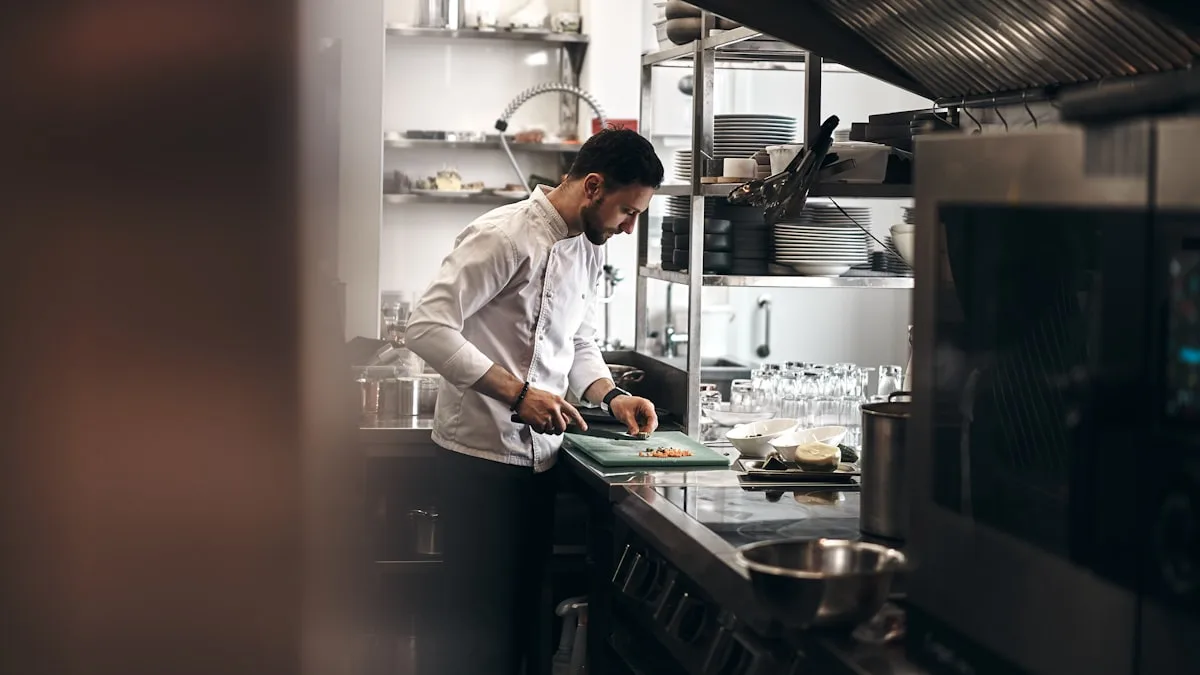
For a busy hotel kitchen or a high-turnover restaurant, the difference between a smooth service and a stressful one often comes down to one unglamorous question: is the seafood you need available, on-spec and ready to cook? Fresh seafood markets are seasonal, weather-dependent and priced on volatility, which makes them a difficult foundation for a menu that has to deliver the same dish, at the same quality, every single day.
This is exactly where a professionally managed frozen-seafood supply earns its place. Modern freezing technology, combined with a disciplined cold chain, allows kitchens to lock in quality at the peak of freshness and release it on demand. The result is fewer surprises, tighter cost control and the freedom to design a menu around what you want to serve rather than what happened to land that morning.
In this guide we walk through the realities of frozen seafood for professional kitchens: the myths worth retiring, how freezing actually protects quality, how the right product forms reduce labour and waste, and what to look for in a supplier built for hospitality. Bemias sources frozen shrimp, squid, cuttlefish, octopus and crab from trusted international producers and supplies corporate buyers across Türkiye, so this is the same thinking we apply with our own clients.
Frozen vs Fresh: Retiring the Myths
The strongest objection to frozen seafood is usually emotional rather than technical: "fresh is always better." In reality, "fresh" at the point of service can mean fish that was landed days ago, iced, transported, held at a market and then transported again. Every one of those hours at chilled (not frozen) temperatures is a hander of quality loss.
The truth professional buyers rely on is this: quality is captured at the moment of freezing, not at the moment of thawing. Seafood frozen quickly and correctly, soon after harvest, can reach the kitchen in better condition than "fresh" product that has spent extra days in the chilled supply chain.
- Myth: frozen is lower grade. Premium producers freeze their best catch precisely because freezing preserves it; grade is set by sourcing and handling, not by temperature.
- Myth: freezing ruins texture. Slow, uncontrolled freezing forms large ice crystals that damage cell walls. Fast, modern freezing minimises crystal size and protects texture.
- Myth: you lose flavour. Rapid freezing locks in moisture and flavour compounds; most perceived "off" notes come from poor thawing or a broken cold chain, not from freezing itself.
How Freezing Protects Quality: IQF and Block
Understanding two terms will make you a sharper buyer. The freezing method directly affects how product behaves in your kitchen.
IQF (Individually Quick Frozen)
With IQF, each piece, shrimp, ring or fillet, is frozen separately and rapidly, then bagged loose. The advantages for foodservice are significant:
- Portion-by-portion control. Take exactly what you need and return the rest to the freezer with no waste.
- Faster, more even thawing. Individual pieces thaw predictably, which supports food safety and consistency.
- Less re-freezing risk. Because you never have to defrost a whole block to use a handful, product stays safer for longer.
Block Freezing
Block product is frozen together in a solid mass, often with a protective glaze of water. Blocks are excellent for high-volume, predictable production where a full unit is used at once, and the surrounding ice can offer extra protection against freezer burn during storage.
The right format is a planning decision, not a quality verdict. IQF suits à la carte flexibility and portion control; block suits batch production and banqueting volumes. Many kitchens stock both.
Menu Consistency and Portion Control
Guests judge a restaurant on repeatability. A signature prawn dish that is generous on Friday and mean on Monday erodes trust faster than almost anything else. Frozen, graded seafood is one of the most powerful tools for delivering that repeatability.
- Consistent sizing. Frozen shrimp is sold by count-per-pound or per-kilogram grades, so every plate uses pieces of a known size. That is the backbone of accurate plating and pricing.
- Predictable cost per plate. When portion size is fixed, your food-cost percentage stops drifting with the market. You can engineer the menu with confidence.
- Year-round availability. Seasonal species become available all year, so a dish does not have to disappear from the menu when the catch is out of season.
For multi-site hospitality groups, this consistency is even more valuable: the same specification can be served in Kayseri, Istanbul or Antalya without renegotiating quality at every location.
Planning, Inventory and Waste Reduction
Fresh seafood forces a use-it-or-lose-it rhythm. Order too much and you bin it; order too little and you 86 the dish mid-service. Frozen supply replaces that gamble with planning.
- Buy to a forecast, not to a market. Order against projected covers and let freezer stock absorb day-to-day swings in demand.
- Run true FIFO. Label and rotate by date so older stock leaves first. Frozen product gives you the time window to do this properly.
- Cut spoilage to near zero. Properly stored frozen seafood holds for months, turning what was a perishable risk into a stable, countable asset.
- Smooth your cash flow. Consolidated, scheduled deliveries reduce emergency top-up buying at premium prices.
Across a year, reduced waste alone often justifies the move to a structured frozen programme, before you even count the labour savings from pre-processed forms.
Food Safety and the Cold Chain in Your Kitchen
Frozen seafood is only as good as the coldest link, and sometimes the weakest link is inside your own building. The cold chain does not end at the delivery door; it ends on the plate. A few disciplines protect both your guests and your investment:
- Check on arrival. Product should arrive hard-frozen with no signs of partial thawing, large ice glaze breaks or freezer burn. Reject anything that looks compromised.
- Hold at a stable, low temperature. Keep freezers consistently cold and avoid temperature swings from overpacking or frequent door opening.
- Never re-freeze thawed product. Once seafood is thawed, treat it as fresh and use it within a short, documented window.
- Separate and label. Prevent cross-contamination and keep clear date records to support your HACCP-based procedures.
Bemias works with sourcing and processing partners that follow internationally recognized food safety standards (such as HACCP, BRC and BAP), and we coordinate the cold chain up to corporate delivery. You can read more about our approach on the quality and food safety page and about our partner facilities.
Choosing the Best Forms for Foodservice
One of the biggest, and most overlooked, advantages of frozen supply is the range of pre-processed forms. The right form removes labour, reduces yield loss and stabilises your plate cost. Match the form to the dish:
Shrimp
- Head-on / headless (shell-on): ideal for grills, paella and presentation-led plates.
- Easy peel: a balance of presentation and prep speed.
- PUD and PD (peeled, deveined; tail-on or tail-off): minimal labour, maximum consistency, perfect for high-volume service, pasta, curries and skewers.
Explore the full range on our shrimp products page, including wild-caught and aquaculture grades.
Squid and Cuttlefish
- Squid: tubes, rings, fillets, whole-cleaned and tentacles, rings are a fryer favourite, while tubes suit stuffing and slicing.
- Cuttlefish: whole, cleaned, fillets, wings and skewers for braises, grills and Mediterranean dishes.
Octopus and Crab
- Octopus: baby octopus for quick searing and starters; larger octopus for slow-cooked mains.
- Crab: whole or cut, for soups, stocks and feature dishes.
Choosing a pre-processed form is effectively buying back kitchen time: less trimming, less waste, fewer skilled hours spent on prep that a producer has already done at scale.
Thawing and Handling Best Practices
Most "bad frozen seafood" complaints are actually thawing mistakes. Get this stage right and the product performs as the producer intended:
- Thaw slowly under refrigeration. Move product to the chiller the day before. Slow thawing protects texture and keeps it in the safe temperature zone.
- For speed, use sealed cold-water thawing. Keep product in its bag and submerge in cold running water, never warm water, and never at room temperature for long periods.
- Cook some forms from frozen. Certain breaded or IQF items perform best cooked straight from frozen; follow the producer's guidance.
- Pat dry and season after thawing. Removing surface moisture improves searing and prevents a steamed, rubbery result.
- Use promptly once thawed. Plan thaw quantities to match service so nothing sits too long.
Choosing a Seafood Supplier for Hospitality
For a professional kitchen, the supplier is part of the operation. A consumer wholesaler is not the same as a partner built for foodservice. When you evaluate options, look for:
- Consistent specification. Reliable grading, counts and forms so what you ordered last month is what arrives this month.
- Cold-chain integrity. Demonstrable temperature control from source to your door.
- Documentation and traceability. Clear records on species, origin and handling that support your own food-safety system.
- Scheduling and responsiveness. A team that plans deliveries around your service, not the other way round.
- Honest communication. A partner that tells you what it can and cannot guarantee, rather than overpromising.
Bemias is structured for exactly this kind of corporate relationship, supplying hotels, restaurants, mall food courts, catering companies, institutions and wholesalers across Türkiye. Learn more about our approach or browse our full product range.
Key Takeaways
- Quality is set at freezing, not thawing, correctly frozen seafood can outperform multi-day "fresh".
- IQF gives portion control and flexibility; block suits high-volume batch production.
- Graded frozen product drives menu consistency and predictable plate cost.
- Frozen supply slashes spoilage and turns a perishable risk into a countable, plannable asset.
- The cold chain ends on the plate, in-kitchen handling and thawing discipline are non-negotiable.
- Pre-processed forms buy back labour and reduce yield loss.
- Choose a supplier built for hospitality: consistent specs, cold-chain integrity, traceability and reliable scheduling.
Frequently Asked Questions
Is frozen seafood lower quality than fresh for a restaurant?
Not when it is frozen correctly. Quality is captured at the moment of freezing, so seafood frozen soon after harvest can reach your kitchen in better condition than "fresh" product that has spent extra days in the chilled supply chain. For most professional kitchens, well-managed frozen supply delivers more consistent results than market-dependent fresh.
What is the difference between IQF and block frozen seafood?
IQF (Individually Quick Frozen) freezes each piece separately, so you can take exactly the portion you need and thaw it evenly, which is ideal for à la carte service and portion control. Block freezing freezes product together in a solid mass, which suits high-volume batch cooking and offers extra storage protection. Many kitchens stock both formats.
How do I thaw frozen seafood safely in a professional kitchen?
The safest method is slow thawing under refrigeration, moving product to the chiller the day before service. For speed, use sealed cold-water thawing with the product still in its bag. Never thaw at warm room temperature, never re-freeze thawed seafood, and use it promptly once defrosted.
Which frozen seafood forms are best for foodservice?
It depends on the dish. Peeled and deveined (PUD/PD) shrimp minimise labour for high-volume service, while shell-on and head-on suit presentation-led plates. Squid rings and tubes, cuttlefish fillets, baby octopus and cut crab let you match the form to the application and cut prep time. Bemias supplies a wide range of forms across all categories.
How does frozen seafood reduce waste and food cost?
Frozen, graded product lets you order to a forecast rather than to a volatile market, run true FIFO rotation and store stock for months. That cuts spoilage to near zero and fixes portion size, which stabilises your food-cost percentage. Pre-processed forms add further savings by reducing trimming and yield loss.
Can Bemias supply hotels, restaurants and catering companies in Türkiye?
Yes. Bemias sources frozen shrimp, squid, cuttlefish, octopus and crab from trusted international producers and supplies hotels, restaurants, mall food courts, catering companies, institutions and wholesalers across Türkiye. We coordinate the cold chain through to corporate delivery. Request a tailored quote or contact our team to discuss your requirements.
Build a Supply You Can Plan Around
A consistent frozen-seafood programme gives your kitchen what it needs most: predictable quality, controlled cost and the freedom to design the menu you want. If you are looking for a dependable corporate partner in Türkiye, we would be glad to help. Request a quote for your specifications, or browse our products to see the full range of shrimp, squid, cuttlefish, octopus and crab we supply, and reach our team any time at contact us or on 0 (539) 949 25 22.